
Teaching Christian Students How to Think About War
by Dr David Murphy
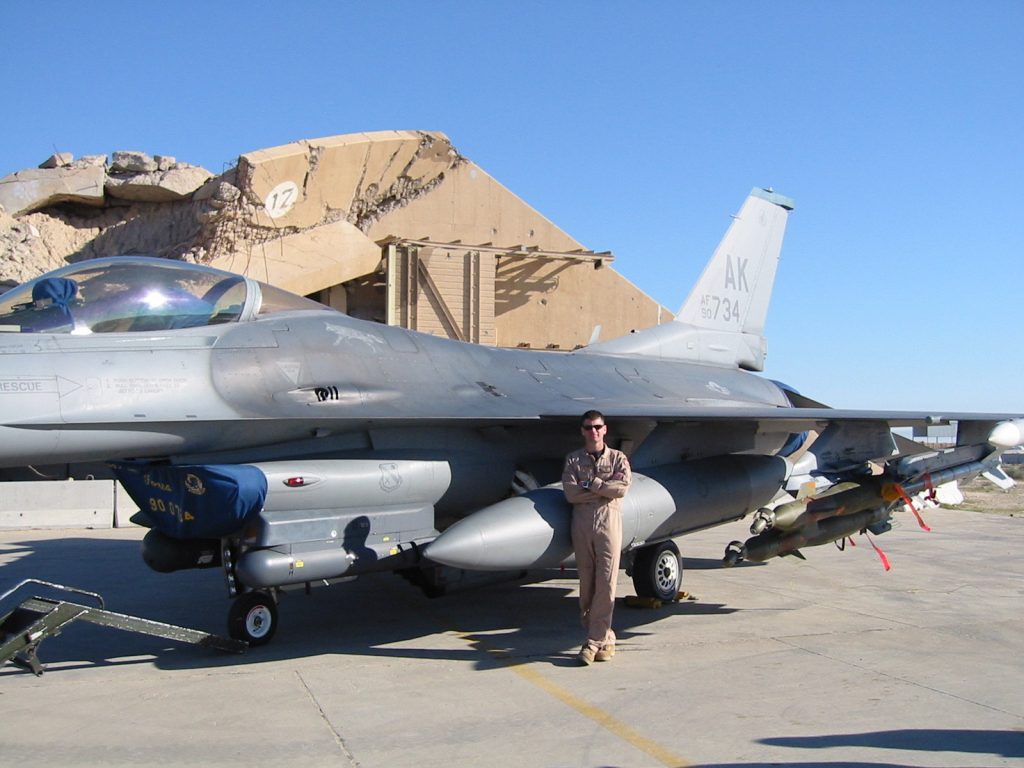
Shortly after 9/11, I climbed into an F-16 in Kuwait, the area where three US F-15Es were shot down by friendly fire last week, and flew long sorties into Afghanistan, taking the long route around Iran. I served 25 years in the United States Air Force after graduating from the Air Force Academy in 1990. About half my career was spent flying F-16 fighters. I retired as a colonel with 275 combat hours flown over 66 sorties. Those missions are easy to count – but harder to carry.
You see, I know war. I understand the consequences of fighting one and the impacts on innocent people, on the young men and women who serve and the families they leave behind. I was lucky to come home to my family; some of my friends didn’t.
So, when I heard of the latest U.S. engagement involving Iran, my first response was grim relief. Part of that relief was the sense the clock was running down. The U.S. envoy Steve Witkoff hasconfirmed Iran could have taken its existing 60 percent enriched uranium to 90 percent weapons-grade in ‘one week, maybe 10 days at the outside’. With Iran also expanding the missile-and-drone threat to Israel and the wider region, waiting longer risked facing a worse fight later, on worse terms and with more innocent deaths. Relief not because war is something to celebrate, but because I believed it had become inevitable.
But relief isn’t certainty. War pushes back against the plans we make for it. We tell ourselves we can control it—set objectives, set a timeline and keep it limited. We can’t always ‘let slip the dogs of war’, Shakespeare wrote. Once a conflict starts moving, it creates pressures that are hard to contain. It’s like a wildfire: you can draw lines on a map where you expect it to burn, but the wind gets the final vote.
That’s why the next phase matters as much as the first. The administration has spoken about limited objectives and avoiding what the military calls mission creep. I take that seriously, becausemission creep is how defined missions become open-ended commitments. Leaders are told ‘just one more step’, ‘just one more target’, ‘just a little longer’. The longer a conflict stretches, the more the cost shows up in casualties, taxpayer dollars and the strain on families.
If I could send a message to President Trump, it would be that military retirees, especially those who have served overseas many times, are largely behind you. But we hope you stick to the objectives and do not allow the mission to expand into another quagmire. Regime change can sound clean in a sentence but in reality, it is extraordinarily difficult and can drag a nation deeper than it intended to go.
And if I could speak a message to the men and women flying combat missions right now, I would start with gratitude. Our prayers and thoughts are behind your success and your safe return. We recognize the sacrifice, and we recognize it is not only yours. It’s a family sacrifice too, borne by the people at home who carry it with them every day. My wife lived that, and eventually, my children did too.
Now I speak not only as a veteran, but as a dean at Colorado Christian University — a school where we take seriously both our faith and our responsibilities as citizens. Students are watching this unfold and asking a serious question: how can Christians, as the Bible teaches, strive to be peacemakers and still believe government has a duty to wage a war?
I tell my students three things. First, Christians have a responsibility to be good citizens—to pay attention, to participate in our government and to engage the political process thoughtfully, whether they support this action or oppose it.
Second, I point them to the Christian moral tradition developed precisely for a broken world: the just war tradition, often associated with St. Augustine and the framework of jus ad bellum. Christianity does not glorify war. But the just war tradition explains why force can be morally justified to restrain evil and protect the innocent, specifically under clear criteria, with clear limits.
Third, being a Christian in the modern world means rejecting both cynicism and triumphalism. At CCU, we are marking Support Israel Week, and we stand with Israel and with democratic partners facing threats. After the horrors of Oct. 7, students can see how quickly violence can shatter ordinary life and why defending the vulnerable is not an abstract debate.
What I’m telling students is this: stay informed, stay engaged, and be honest about the cost of action and the consequences of inaction. Behind every headline and news clip are young men and women doing dangerous work, and families at home carrying the strain day after day. And beyond US citizens are innocent people, families in the Middle East who have nothing to do with the Iranian regime and its reign of terror, who still end up living with the fear, disruption and loss that war brings.
Support those who serve by showing gratitude, praying for their safety, and keeping pressure on leaders to act with clear objectives and clear limits. Seek justice with clear eyes. Because if we speak lightly about war, we end up treating human lives lightly also.
Dr. David Murphy is Dean of Behavioral and Social Sciences, Colorado Christian University; retired U.S. Air Force colonel.